OUR SERVICES
Tyre Fitting & Repairs
Our team of expert mechanics can provide a tyre assessment and repair service, and can replace the tyres if they’re too worn or damaged. We can also handle a variety of wheel repairs, and help if you’ve lost your locking wheel nut.
Tyre Fitting & Repairs in Worcester
The tyres are the only thing that connects your vehicle directly to the road, so it’s vital that they’re kept in good condition and have sufficient tread depth. We can assess your tyres and advise if they need repair or replacement so the vehicle is safe to drive.
Recharged Automotive
Get A Free Quote
Speak to our team about any issues, servicing, diagnostics or repair work for your vehicle. Reliable workmanship and honest advice from experienced technicians.
- 01905 458156
- hello@rechargedautomotive.com
- Mon-Fri 8am-5pm
- Unit 10, Checketts Lane Industrial Estate, Checketts Lane, Worcester, WR3 7JW

Tyre fitting & repairs in Worcester
Our Tyre Services Include:
- Tyre assessment
- Tyre repairs
- Tyre fitting
- Wheel repair
- Locking wheel nut replacement
Common wheel & tyre problems we fix
Worn tyres
Damaged tyres
Lost wheel nuts
Damaged alloys
Tyre services in Worcester
How do I know which tyre size I need?
The easiest way to find out what size tyres you need is to check the sidewall of your current tyres. You’re looking for three numbers which will give you the width, profile and alloy size e.g. 205/ 55 R16. In this case, the width of the tyre is 205mm, the profile is 55, and the alloy size is 16”. You can also check the standard tyre size for your vehicle by looking at the owner’s manual. Get in touch if you need any help.
How It Works
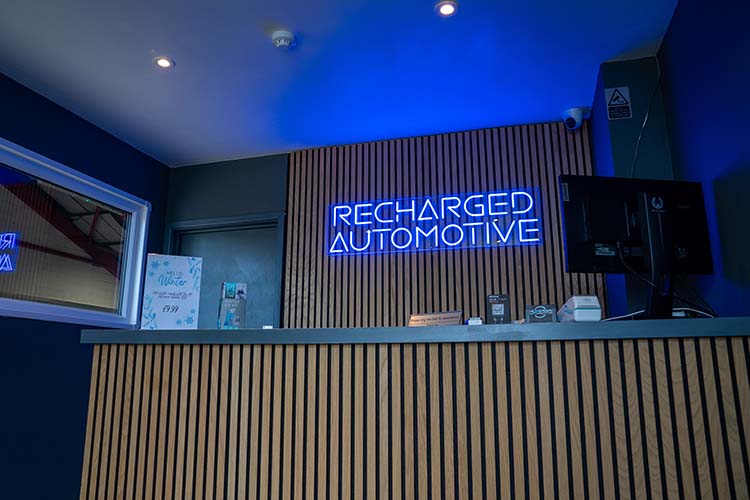
Contact Us
Get in touch with our team to discuss your vehicle, the issues you’re experiencing or any servicing and repair work you may require.
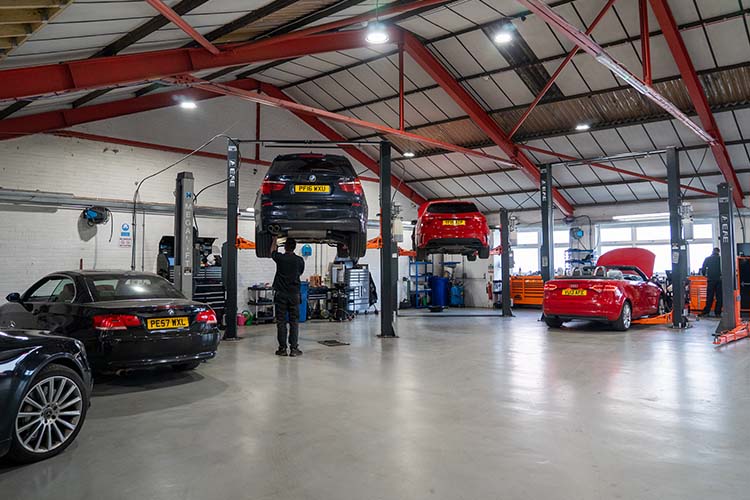
We Get To Work
Our experienced technicians carry out thorough inspections, diagnostics and repair work using quality parts and trusted workshop equipment.

You're Back On The Road
Once the work is complete, your vehicle is ready to get back on the road performing safely, reliably and at its best.
Why choose Recharged Automotive?
Experienced & Trusted Technicians
Honest Advice & Quality Work

German Vehicle Specialists
Recharged Automotive Worcester
What our customers are saying
Recharged Automotive
Get A Free Quote
Need help with your vehicle? Contact our team to discuss servicing, diagnostics or repair work with experienced technicians you can rely on.
- 01905 458156
- hello@rechargedautomotive.com
- Mon-Fri 8am-5pm
- Unit 10, Checketts Lane Industrial Estate, Checketts Lane, Worcester, WR3 7JW
FAQs | Tyres
Here are the answers to some frequently asked questions about tyre repairs. If you have any issues with your vehicle’s tyres, or need them to be assessed, get in touch with our team today.
What do the numbers and letters on the sidewall of a tyre mean?
The numbers and letters on a tyre’s sidewall indicate the technical specifications such as the size, load index, and speed rating. It’s important to fit a tyre with the correct specifications to ensure legal compliance, safety and optimal driving performance.
The meaning of the numbers and letters are best explained by using an example. The example we will use is 215/40 R18 89Y. Here’s what each number/letter means:
- 215 – the width of the tyre in mm e.g. 215mm
- 40 – the aspect ratio (profile) of the tyre. This is a percentage of the tyre width so in this case it’s 40% of 215mm, so the sidewall height will be 86mm.
- R18 – this refers to the alloy wheel size so in this case it’s 18”.
- 89 – this is the load index of the tyre.
- Y – this is the speed rating of the tyre.
Can you fit and repair tyres whilst I wait?
You are more than welcome to wait while we fit your tyres. It usually takes around 20 minutes per tyre. For all tyre and wheel alignment services, we kindly request that you book with us getting in touch.
What load index does my tyre need to have?
The load index of the tyre will have 2-3 digits and typically ranges from 70-120. You can find it on the sidewall (next to the tyre size e.g. 205/55 R16), or by checking the vehicle handbook. It’s a good idea to check the vehicle handbook as it’s a possibility that non-standard tyres may have been fitted to the vehicle if it was purchased second-hand. Get in touch if you need help.
This number refers to the maximum weight that a single tyre can support in kilograms. It’s very important to have the correct load index for your vehicle as otherwise it can lead to increased wear, high risk of blowouts, and will result in an MOT fail.
What speed rating does my tyre need to have?
This can be checked on the sidewall of the current tyre, and in the vehicle’s handbook. It’s a good idea to check the handbook as it’s a possibility that non-standard tyres may have been fitted to the vehicle if it was purchased second-hand. The speed rating is denoted as a letter and typically ranges from S-Y on road-legal cars. It will be next to the load rating on the sidewall. It’s very important to fit tyres with the correct speed rating, as otherwise it will not be safe to drive on and will fail an MOT.
What are the minimum tread requirements? And how do I measure this?
The UK’s minimum legal requirement for tyre tread is 1.6mm across the central ¾ of the tyre, and around the entire circumference. While a gauge can measure this, the easiest method is to use a 20p coin. Place the 20p coin into the part of the tyre with the least tread. If you can see the coin’s outer rim, then the tyres have less than 1.6mm tread depth and should be replaced immediately. Having too little tread is a huge safety issue and will result in an MOT failure.
Whilst 1.6mm is the legal limit in the UK, it’s strongly advised that the tyres are replaced when the tread depth reaches 3mm, as below this there is a significant reduction in braking performance and safety.
What should I do if I can't find my locking wheel nut?
Never try to create your own locking wheel nut key – it can cause more problems than it’s worth. Get in touch and we can help.
How do I check my tyre pressure?
- Firstly, check your vehicle’s recommended tyre pressure –this can be found inside the driver’s door or your vehicle’s fuel cap.
- Remove your wheel’s dust caps. Place a pressure gauge on the valve; this gives you the pressure reading.
- Compare your tyre’s reading with the recommended pressure levels. If you need to inflate your tyres, adjust the pressure on the air compressor and begin inflating your tyres.
Can you fix a damaged wheel?
At Recharged Automotive, our technicians have the skills and expertise to deal with most wheel repairs. However, some damage is beyond repair. If your wheel can’t be fixed, we’ll suggest solutions and take it from there. Get in touch if you’re in the Worcester area and any of your wheels are damaged.
Why is wheel balancing important?
Wheel balancing ensures that the weight distribution within the wheel and tyre is even, to prevent steering vibrations and uneven tyre wear. The wheels should be balanced whenever new tyres are fitted, or if the vehicle hits any potholes, kerbs or bumps at speed.
Why is wheel alignment important?
Wheel alignment is important to make sure that the wheels are straight and positioned correctly, to prevent the steering pulling to one side. The wheels can become misaligned by hitting potholes or bumps at speed, after a collision, or due to worn suspension parts. The wheel alignment should be checked once per year, or if you notice the steering pulling to one side.
Do the wheels need to be rotated?
It’s recommended to rotate the wheels every 5,000 miles. This ensures even tread wear, and can extend the life of the tyre.
Do I need to replace all the tyres at the same time?
It’s important to replace tyres in pairs (e.g. both front or both rear tyres) in order to ensure the handling stays balanced, the braking is consistent and that the tyres wear evenly. On an AWD car, it’s recommended to change all four tyres at the same time, but this is not a necessity on FWD and RWD vehicles.
Let's get you back on the road.
German car specialists delivering expert servicing, diagnostics and repairs to keep your vehicle performing at its best and get you back on the road with confidence.